Applying to Ireland
Yourfuturein
Irelandbeginshere.
Your application roadmap.
- Step 01
Research Universities
Compare programmes, campus life, clinical rotations and Singapore recognition across TCD, UCD, UCC, University of Galway and RCSI.
- Step 02
Prepare Academic Documents
Compile transcripts, predicted grades, IB / A-Level results and any supporting academic references required by each university.
- Step 03
Submit University Applications
Apply through the correct route — CAO, direct application or agency, depending on the university and programme you're targeting.
- Step 04
Receive Offer & Accept
Review your offer letter, meet any conditional requirements and confirm your acceptance before published deadlines.
- Step 05
Visa & Administrative Preparation
Apply for your student visa, arrange finances, insurance and accommodation and complete pre-departure paperwork.
- Step 06
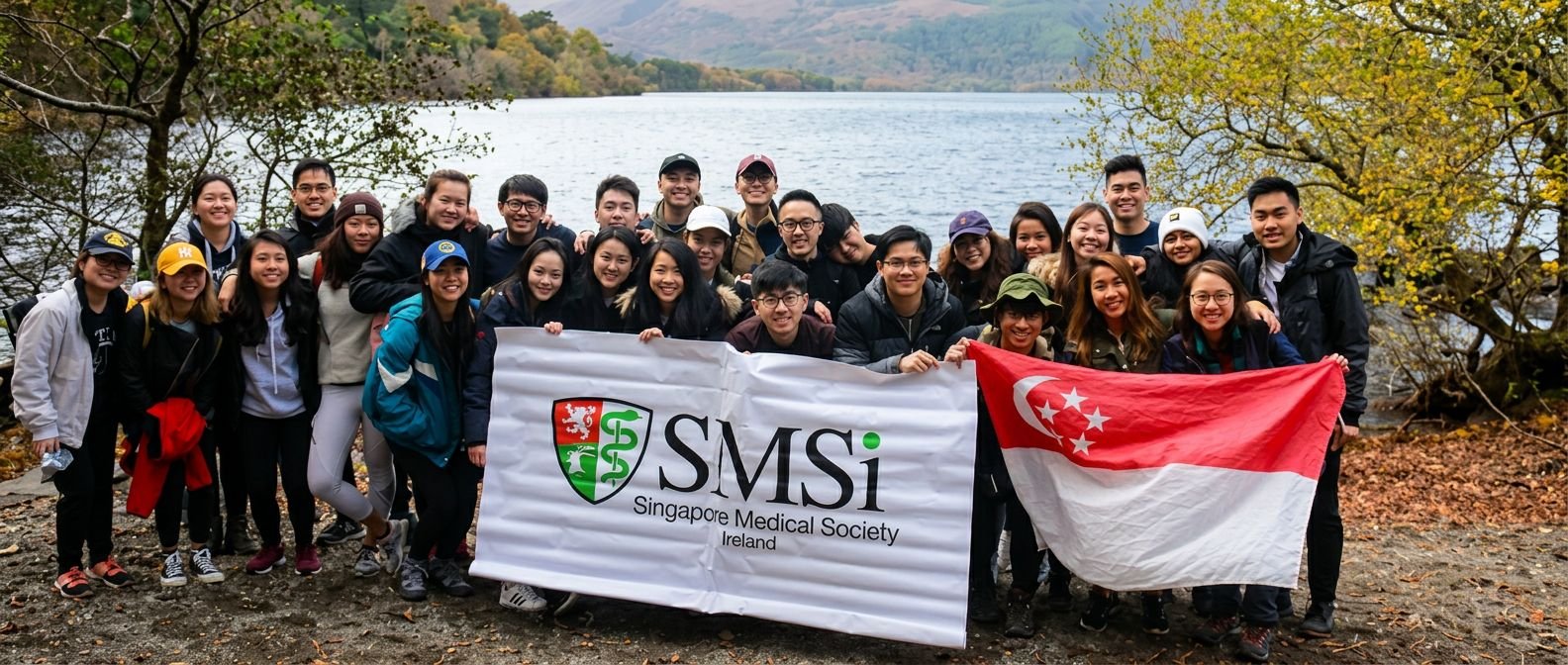
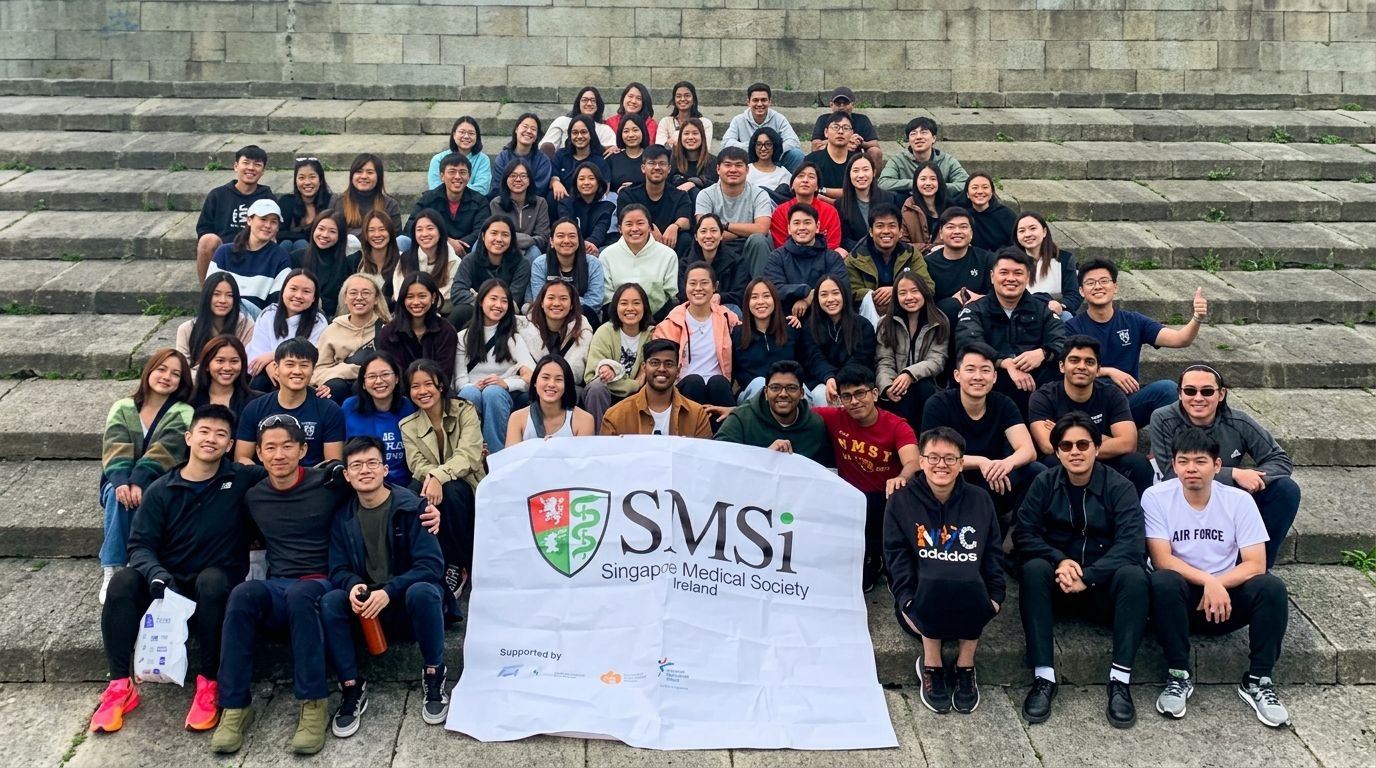
Arrive in Ireland & Join SMSI
Land in Ireland, register with SMSI and step straight into a ready-made Singaporean healthcare community.
Plan your investment.
Indicative annual figures in euros. Use these as planning anchors — confirm exact numbers with each university.
Tuition
Accommodation
Living Expenses
Transportation
Insurance
A year in key dates.
- Aug – Sep
Applications Open
Non-EU application portals open across Irish universities. Begin research, shortlist and account setup.
- Oct – Jan
Submit Documents
Upload transcripts, references, personal statement, English proficiency and identification well before deadlines.
- Feb – Apr
Offers Released
Conditional and unconditional offers arrive on rolling basis. Review, compare and accept your chosen offer.
- May – Jul
Visa Preparation
Lodge your student visa, arrange finances, insurance, accommodation and complete pre-departure paperwork.
- Aug – Sep
Arrival in Ireland
Land, register with SMSI and settle in ahead of orientation and the start of the academic year.
What each university looks for.
Baseline expectations across the five Irish universities SMSI represents.
Academic Requirements
Strong GCE A-Level, IB Diploma or Polytechnic results — Chemistry and Biology usually essential for medical programmes.
English Requirements
IELTS, TOEFL or equivalent proof of English proficiency, with minimums that vary by university and programme.
Required Documents
Transcripts, passport, identification and any programme-specific paperwork uploaded through the application portal.
Personal Statement
A concise, honest reflection on your motivation for medicine or allied healthcare and the values you bring to it.
References
Academic or clinical references from teachers, tutors or supervisors who can speak specifically to your suitability.
Everything you need, in one place.
Avoid the common mistakes.
Start early, decide slowly
Begin research 12–18 months out. The best applications come from students who had time to weigh their options.
Tailor each personal statement
Generic essays get lost. Speak to the specific programme, values and clinical culture of each university.
Mind every deadline
CAO closes earlier than most non-EU routes. One missed date can cost you an entire application cycle.
Double-check your documents
Wrong file names, missing signatures and outdated transcripts are the most common reasons applications stall.
Ask a senior, not a forum
Anonymous threads exaggerate. Talk to SMSI reps for honest, first-hand context on what each university is really like.